
Pedals
Automotive & Industrial Application
Plastic Pedal Injection Molding – Accelerator, Brake & Clutch Pedal Components
A pedal is one of the few plastic parts a driver touches with full body weight every day. It has to stay stiff under load, survive millions of actuations, hold the sensor alignment of a drive-by-wire module and still feel solid underfoot. Ming-Li Precision builds the molds and molds the parts for plastic accelerator pedals, brake and clutch pedal arms, pedal pads and pedal-module housings – from DFM and Moldflow simulation through in-house tooling to IATF 16949 series production in Taichung, Taiwan.
Replacing steel stampings and die-cast parts with glass-fiber-reinforced engineering plastics cuts weight, removes welding and painting steps and lets ribs, bosses, clips and textures be molded in one shot.
IATF 16949
Automotive quality system, PPAP & full lot traceability
Moldflow DFM
Filling, warpage & fiber-orientation simulation before steel is cut
Gas Assist & 2K
Hollow, rigid pedal arms and soft-touch two-shot pads
ZEISS X-Ray CT
Non-destructive check of voids & inner geometry
Pedal Components We Tool and Mold
Typical pedal-system parts produced in our plant for passenger cars, EVs, commercial vehicles, off-road and industrial equipment:
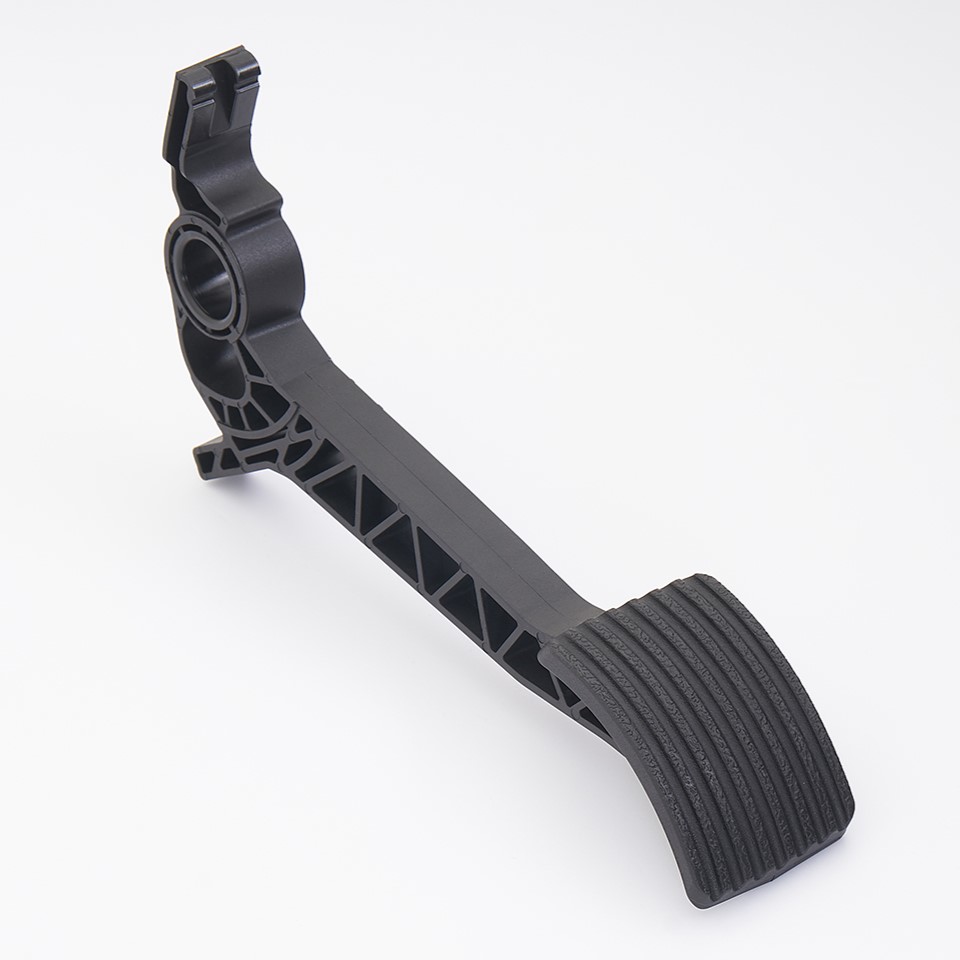
Accelerator Pedal Arms
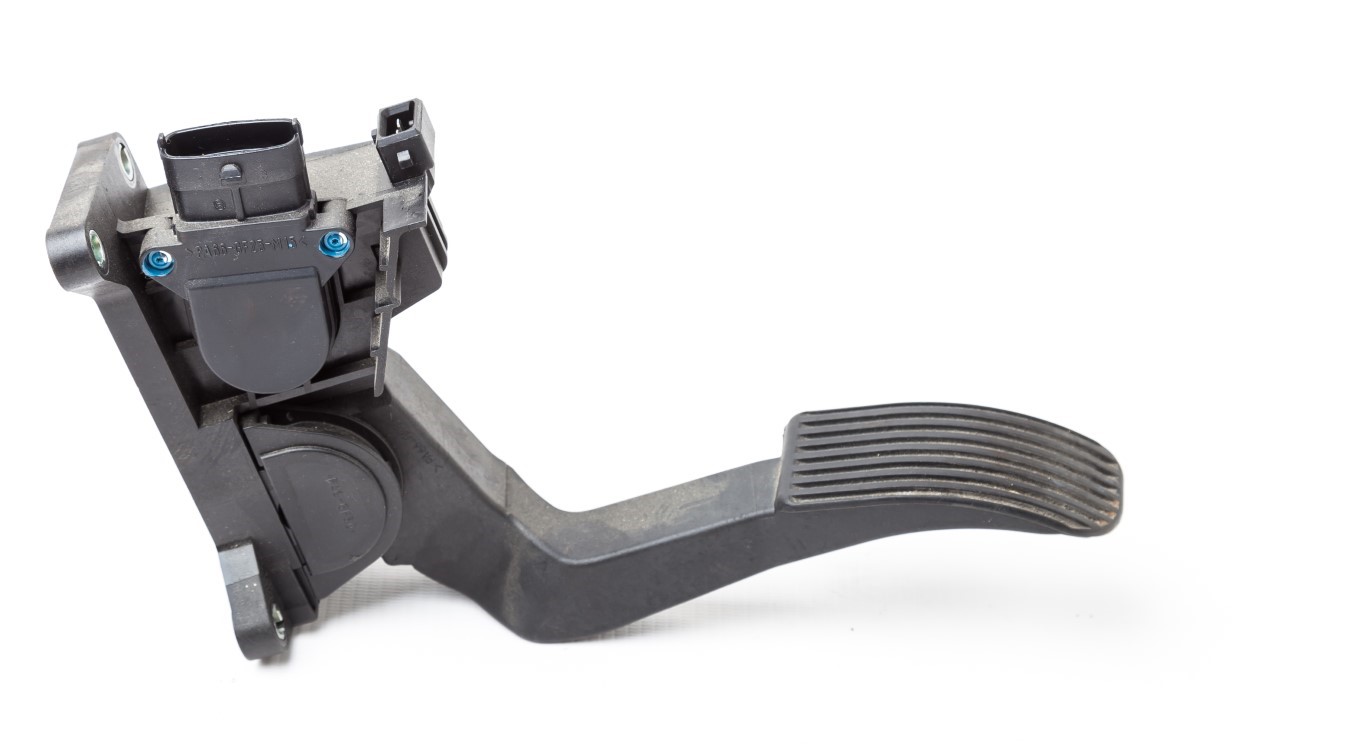
Drive-by-wire (E-gas) pedal levers with integrated pivot hub, sensor coupling and return-spring seats, molded in PA66-GF or PPA-GF.
Brake & Clutch Pedals
Structural plastic pedal arms and hybrid metal-plastic designs, with steel bushings or reinforcements secured by insert molding.
Pedal Pads & Covers
Anti-slip ribbed pads with mold-textured surfaces, or two-shot pads combining a rigid core with a TPE/TPV grip layer.
Pedal Module Housings & Brackets
Mounting brackets, sensor housings and covers with tight positional tolerances for Hall-effect / position-sensor alignment.
Industrial & Medical Foot Controls
Foot switches and pedal bodies for machinery, agricultural vehicles and medical / dental equipment where insulation and cleanability matter.
Bicycle & Fitness Pedals
Lightweight pedal bodies with molded traction patterns, metal spindle inserts and integrated reflector pockets.
Why Switch from Metal to Plastic Pedals?
- Lower weight – every gram saved helps range in EVs and fuel economy in ICE vehicles.
- Fewer parts, fewer operations – clips, stops, bearing seats and labels molded in; no welding, machining or painting.
- No corrosion – stable in humid, salty and wash-down environments.
- Electrical insulation – ideal next to sensors and wiring in electronic pedal modules.
- Design freedom – topology-optimized rib networks put material only where the load path needs it.
- Repeatable cost – once the mold is qualified, part-to-part consistency is excellent across high volumes.
Engineering a Pedal That Never Feels “Plastic”
Pedals are safety-relevant parts. Our engineers review every design for stiffness, fatigue and molding risk before tooling starts.
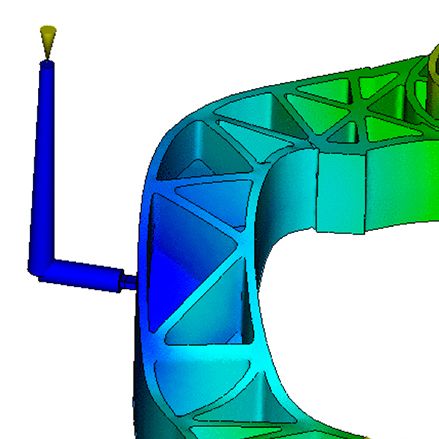
Moldflow & Fiber Orientation
We simulate filling, packing and warpage to set gate location, keep weld lines away from high-stress zones and align glass fibers with the bending load of the arm.
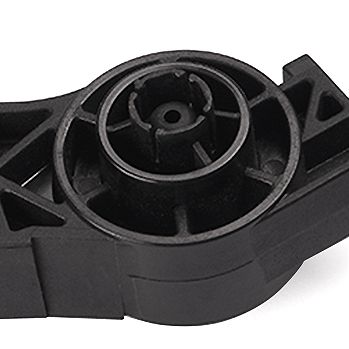
Rib Design & Pivot Hubs
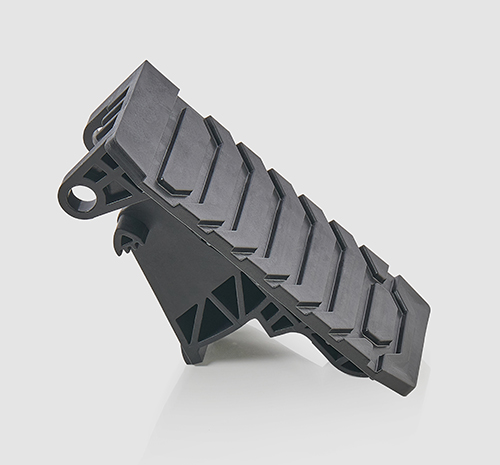
Uniform wall thickness, triangulated ribs and precisely round bearing seats keep the pivot free of sink marks and ovality, so the pedal feel stays consistent over its lifetime.
Surface Texture & Grip
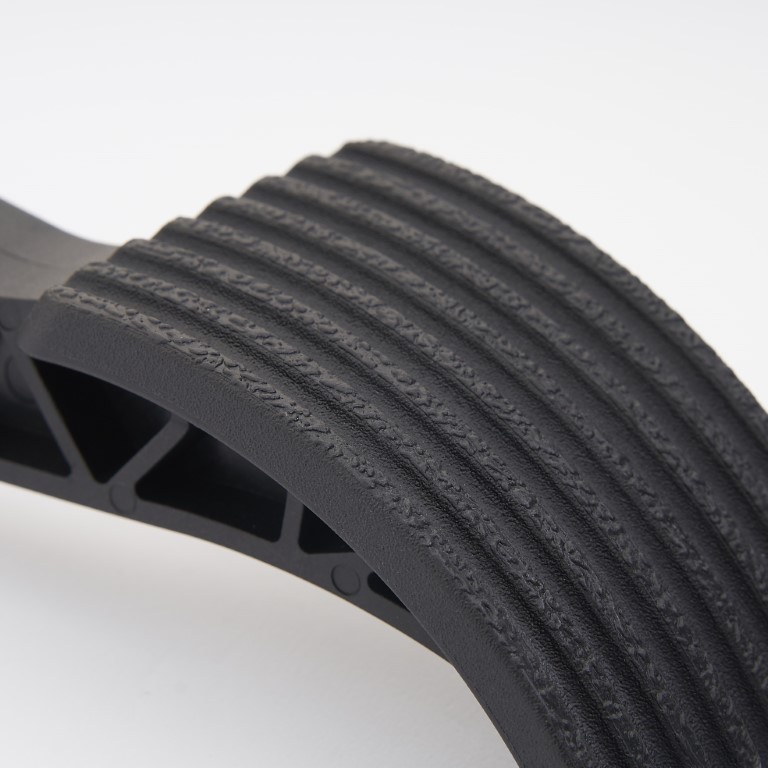
Mold-etched or laser textures on the pad give a premium look and reliable grip, while hiding flow lines typical of fiber-filled materials.
For thick pedal arms, gas-assist injection molding forms an internal channel that removes sink marks, shortens cycle time and increases section stiffness. See also our DFM & Moldflow analysis service.
Common Materials for Plastic Pedals
| Material | Typical Pedal Use | Key Properties |
|---|---|---|
| PA6 / PA66 GF30–GF50 | Accelerator, brake & clutch pedal arms | High stiffness and strength, good fatigue resistance, cost-effective |
| PPA / PA6T GF | Highly loaded arms, under-hood areas | Low moisture uptake, stable dimensions and stiffness at elevated temperature |
| PBT GF | Sensor housings, brackets | Dimensional stability, good electrical properties |
| POM | Bushings, sliders, pivot parts | Low friction, wear resistance, quiet operation |
| TPE / TPV | 2K pedal pads and grip layers | Soft touch, anti-slip, bonds to rigid substrate in two-shot molding |
| PC/ABS, PP | Covers, trim, non-structural parts | Good appearance, impact resistance, economical |
Molding Technologies for Pedal Systems
- Gas-Assist Injection Molding – hollow, lightweight and rigid pedal arms without sink marks.
- 2-Shot / 2K Molding – rigid pedal body plus soft-grip pad in a single process, no gluing.
- Insert Molding & Overmolding – steel bushings, shafts, nuts and magnets embedded for hybrid metal-plastic pedals.
- Heat & Cool molding – improves surface quality on fiber-filled visible parts.
- In-house mold manufacturing – tooling designed and built in our own toolroom for fast iterations and long-term maintenance.
Quality Assurance for Safety-Relevant Pedal Parts
Every pedal program runs under our IATF 16949 system, with documentation and measurement capability to match OEM and Tier-1 expectations.
APQP & PPAP
PFMEA, control plan, capability studies and full submission packages.
Detects internal voids, gas-channel shape and insert position without cutting parts.
Full-surface deviation maps and precise checks of hub, pivot and mounting features.
Traceability
Material lot, mold, cavity and production date traceable for every shipment.
From Drawing to Mass Production
01
RFQ & DFM
Design review, material advice
02
Moldflow
Gate, warpage, fiber orientation
03
Mold Making
In-house design & machining
04
Trial & Metrology
T1 samples, CT & 3D reports
05
PPAP
Validation & approval
06
Mass Production
SPC, packing & global shipping
Pedal Molding Gallery
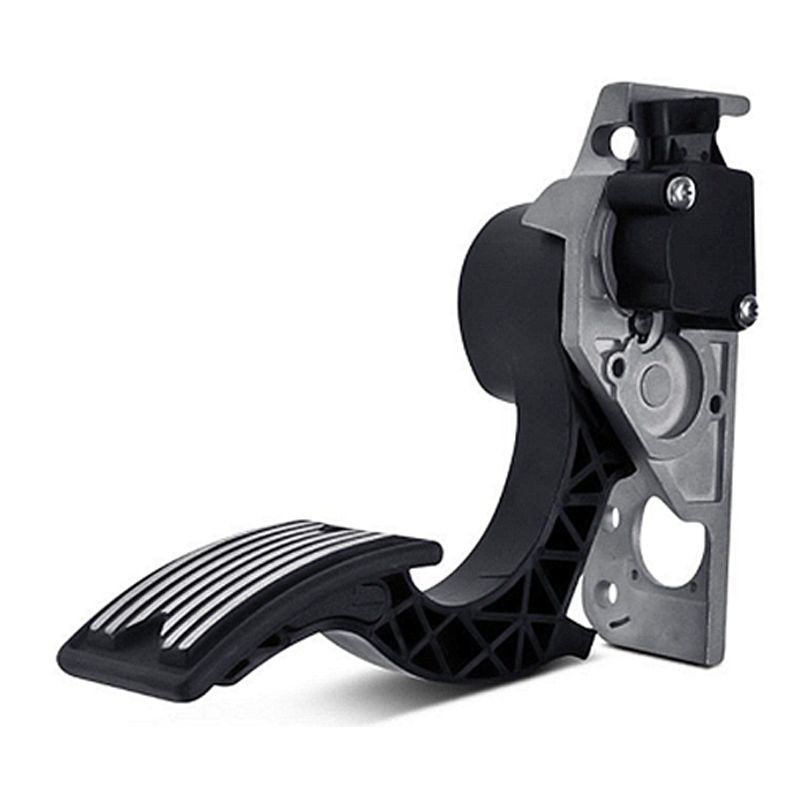
Electronic accelerator pedal module
GF-reinforced pedal arm
Textured anti-slip pedal pad
Plastic Pedal Molding – FAQ
Are plastic accelerator and brake pedals strong enough?
Yes – when designed correctly. Glass-fiber-reinforced polyamides with an optimized rib structure, correct fiber orientation and well-placed weld lines are widely used for accelerator pedals and increasingly for brake and clutch pedals. Hybrid designs with insert-molded steel can be used where loads are highest.
Which material is best for an injection molded pedal arm?
PA66 GF30–GF50 is the most common choice. PPA-GF is selected when lower moisture absorption or higher temperature stiffness is needed. We recommend the grade after reviewing your load cases and OEM material specifications.
Why use gas-assist molding for pedals?
Gas assist hollows out thick sections of the arm, eliminating sink marks and internal voids, reducing weight and cycle time, and creating a closed tubular section with high bending stiffness.
What do you need for a pedal quotation?
Please send 3D data (STEP/IGES), 2D drawings with tolerances, material specification, annual volume and any test requirements. Our engineers will reply with a DFM review and a tooling and part quotation.
Developing a New Pedal or Converting from Metal?
Send us your drawings – Ming-Li’s engineering team will provide a DFM review and quotation for tooling and production.
Request a Quote