
Ultra-Precision Micro Injection Mold
Ultra-Precision Micro Injection Mold & Micro Molding Tooling Manufacture
As products become smaller, lighter, and more functional, the demand for Micro Injection mold and Micro molding tooling has increased significantly across medical, semiconductor, optical, automotive electronics, micro connector, and precision micro gear industries.
Ming-Li Precision specializes in Ultra-Precision Micro Injection Mold, Micro molding tooling, and miniature precision tooling solutions for customers requiring extremely small plastic components with ultra-tight tolerances and stable production performance.
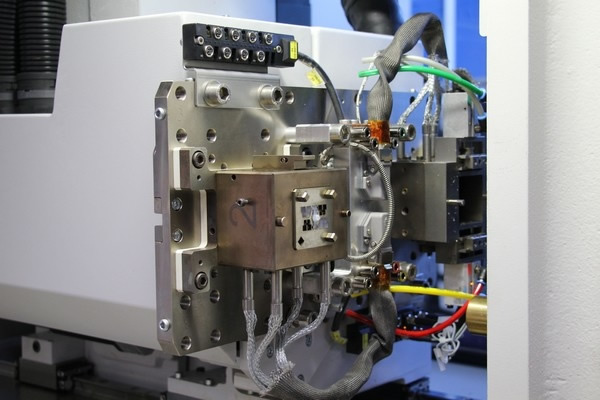
Why Ultra-Precision Micro Tooling Matters
At micro scale, tolerance is no longer measured only in tenths of millimeters — it becomes a matter of microns. Even microscopic flash, gate inconsistency, dimensional drift, cavity mismatch, or micro venting failure may result in connector failure, optical misalignment, poor gear transmission, or medical assembly defects.
This is why Micro Injection mold engineering capability becomes the deciding factor between stable production and costly failure. Many suppliers claim micro capability, but few can truly support ultra-small mold structures requiring micron-level precision, precision shut-off design, micro gate control, and reliable micro inspection.
What Is a Micro Injection Mold?
A Micro Injection mold is a specialized mold system designed for manufacturing miniature plastic components with extremely small geometries, thin-wall features, micro-scale structures, and tight dimensional tolerances.
Unlike standard tooling, Micro molding tooling must maintain ultra-small cavity precision, stable dimensional repeatability, micro gate consistency, precision shut-off structures, controlled venting performance, and long-term mold durability.
Micro molding tooling must control:
- Ultra-small cavity precision
- Micro gate consistency
- Precision shut-off structures
- Flash mitigation for micro parts
- Micro venting and gas evacuation
- Shear heat through micro gates
- Micro insert positioning
- Long-term mold durability
Proven Micro Part Capability
Ming-Li has experience supporting micro-scale parts as small as 0.005 g, with minimum shot sizes around 0.1 g. These values are important for customers evaluating true micro tooling capability rather than general small-part molding.
Miniature gears, micro connectors, optical components, medical micro parts, micro fluidic mold structures, and micro functional components require tooling precision that can be validated at a very small scale.
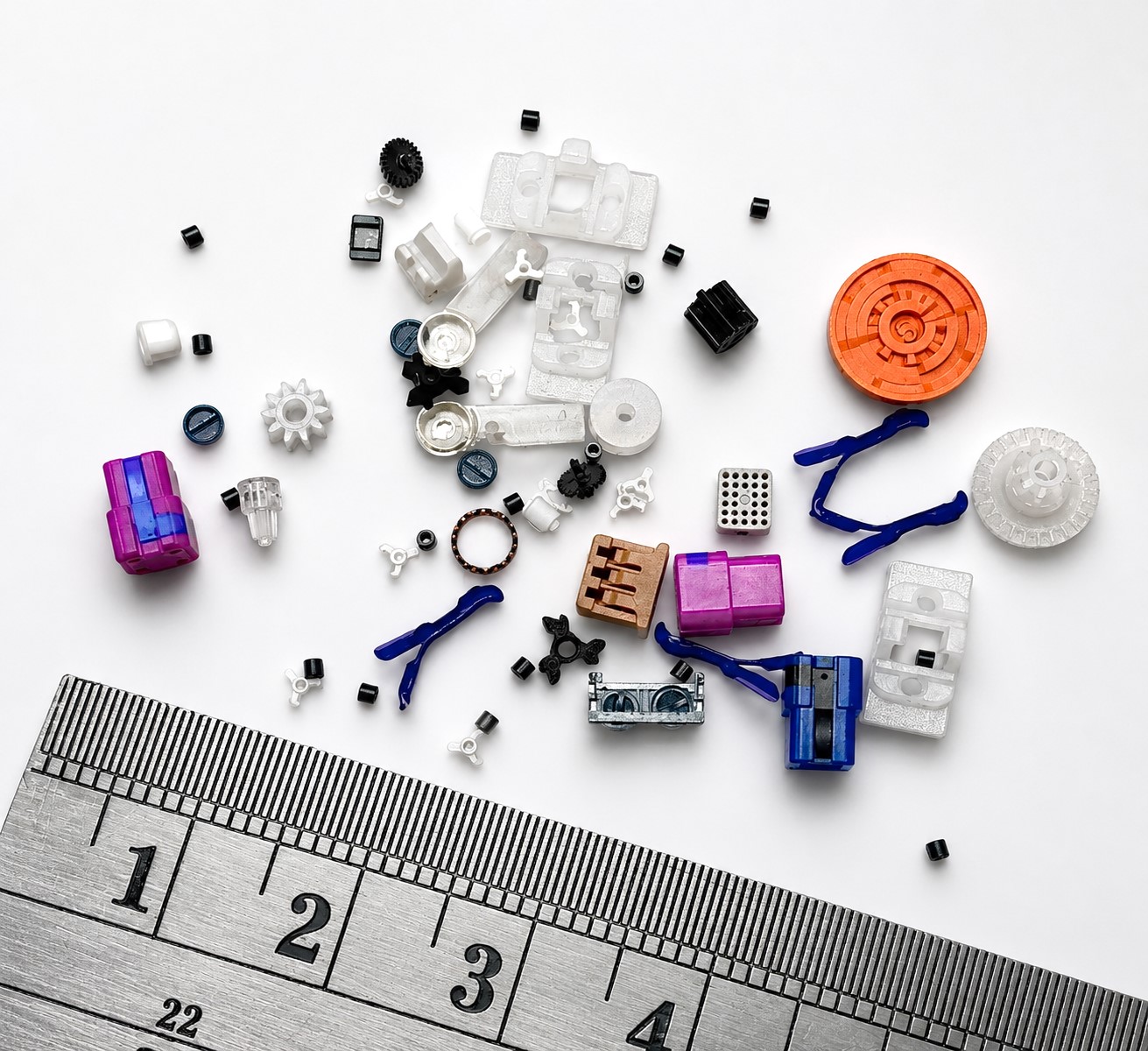
Why Ultra-Precision Micro Injection Mold Is Difficult
Designing an ultra precision micro mold is significantly more challenging than standard mold development. As plastic parts become smaller, tolerance windows become dramatically tighter, and even very small tooling variation may lead to unacceptable product performance.
Dimensional Instability
Micro components often require micron-level stability. Small cavity deviation may affect assembly and product function.
Flash Generation
Micro flash can interfere with connector fitting, electrical contact, medical sealing, optical alignment, or micro gear transmission.
Gate Inconsistency
Micro gates must maintain consistent filling behavior while avoiding short shot, gate freezing, high shear heat, or poor repeatability.
Micro Venting & Diesel Effect
Micro cavities are highly prone to air entrapment and diesel effect due to ultra-fast filling through small gates. Advanced micro-venting and gas evacuation concepts help reduce gas burns, black spots, and short-shot risks.
Micro Insert Positioning
Micro insert mold applications require extremely stable insert location and repeatable fixture design.
Inspection Limitation
Hidden micro defects and internal geometry may require ZEISS CT scanning and precision metrology validation.
Common Micro Mold Failure Risks
| Critical Risk | Common Supplier Issue | Ming-Li Precision Solution |
|---|---|---|
| Flash on micro parts | Functional failure or assembly interference | Ultra-precision shut-off design and micron-level mold alignment |
| Short shot | Incomplete filling in thin or tiny geometry | Micro gate optimization and DFM / Moldflow-supported tooling review |
| Micro dimensional shift | Poor repeatability during production | ±1 μm YASDA ultra-precision machining and stable mold structure design |
| Air entrapment / gas burn | Diesel effect, black spots, or surface defects | Advanced micro-venting, gas evacuation design, and optional vacuum-assisted venting concepts |
| Tiny insert displacement | Assembly issue or electrical failure | Precision micro insert positioning and fixture concept review |
| Hidden defects | Inspection limitation | ZEISS CT validation and precision dimensional verification |
| Micro gear mismatch | Poor transmission or noise | Micro gear mold development supported by precision gear measurement experience |
Why Micro Molding Tooling Requires Ultra-Precision Engineering
Compared with standard tooling, Micro molding tooling requires significantly more advanced mold engineering because micro parts often include extremely small gates, thin-wall geometry, ultra-tight tolerance requirements, high precision shut-off areas, stable thermal control, shear heat management, and precision venting.
Micro Cavity Precision
A successful Micro Injection mold requires extremely precise cavity machining and stable micro insert structure.
Micro Gate Design
Micro gate geometry directly affects filling consistency, gate freezing risk, shear heating, and long-term repeatability.
Flash-Free Micro Mold Strategy
At miniature scale, even microscopic flash can become a functional defect. Precision shut-off design is critical.
Micro Venting & Shear Heat
Advanced micro-venting, gas evacuation design, and optional vacuum-assisted venting concepts help reduce air entrapment, diesel effect, gas burn marks, and short-shot risks caused by high shear heat through micro gates.
Thin Wall Micro Molding Tooling
Thin wall micro molding tooling requires careful gate design, flow balance, venting, and mold strength review to avoid deformation or incomplete filling.
CT Validation
ZEISS CT scanning supports validation of internal micro geometry that cannot be easily inspected by conventional methods.
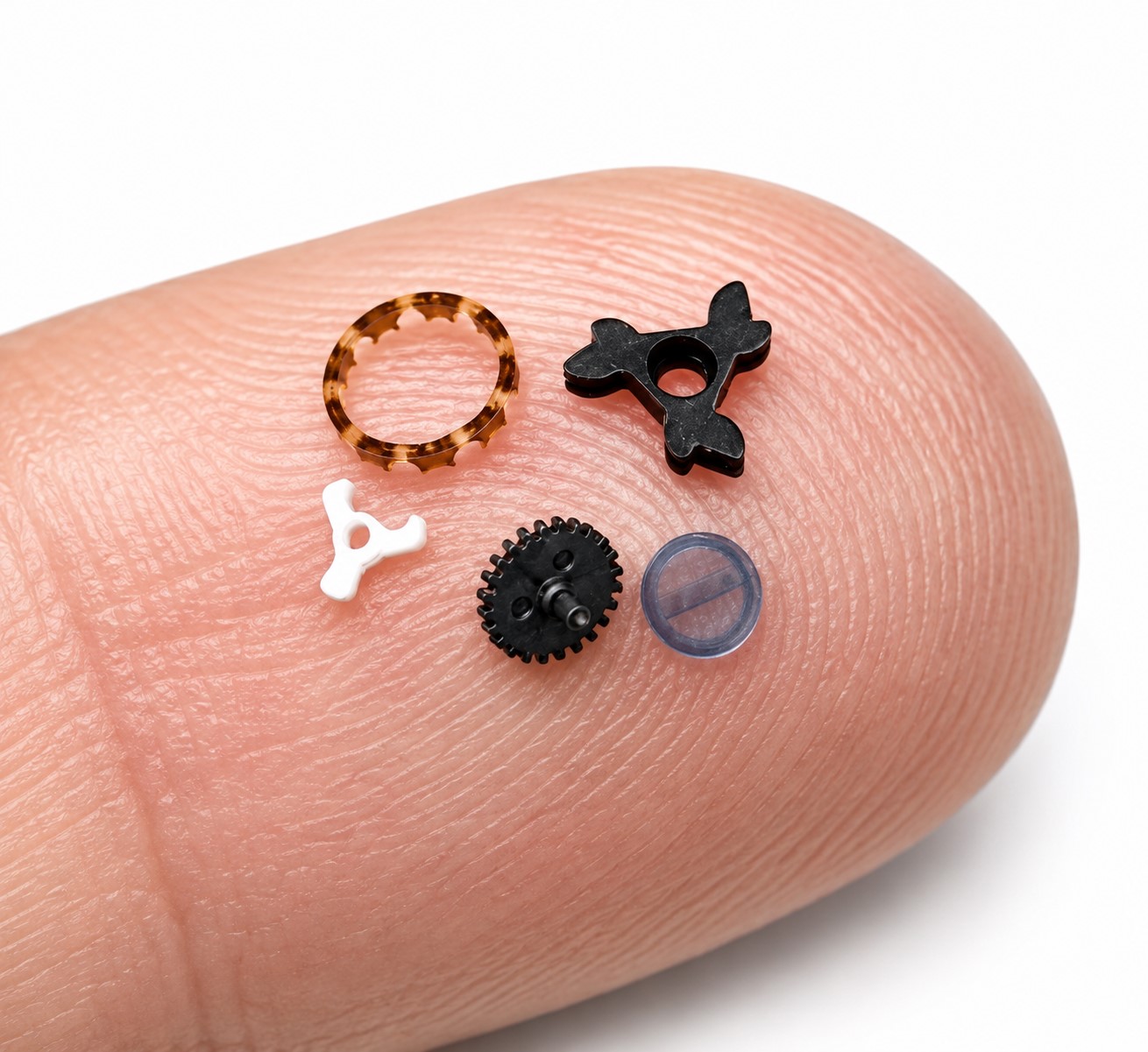
Why Ming-Li Can Build Micro Tooling Others Cannot
Ming-Li combines YASDA ultra-precision machining up to ±1 μm, GF AgieCharmilles EDM / Wire Cut, ZEISS CT validation, DFM, Moldflow-supported tooling review, and in-house production support.
This integrated capability allows Ming-Li to support Micro Injection mold projects involving micro gears, micro connectors, medical micro components, LCP precision tooling, optical parts, micro insert mold structures, micro fluidic mold applications, and ultra-small plastic components.
Why Engineers Choose Ming-Li for Micro Injection Mold
| Critical Challenge | Typical Supplier Risk | Ming-Li Precision Solution |
|---|---|---|
| Micro cavity precision | Dimensional instability | YASDA ultra-precision machining up to ±1 μm |
| Flash generation | Functional interference | Precision shut-off engineering for micro structures |
| Tiny gate control | Short shot or unstable filling | Customized micro gate design and Moldflow-supported review |
| Thin wall geometry | Warpage or deformation | DFM and shrinkage compensation strategy |
| Micro venting | Gas burn, diesel effect, or surface defects | Micro venting and gas evacuation design review for high-speed micro filling |
| Hidden defects | Unverified internal geometry | ZEISS CT scanning validation |
| Long-term repeatability | Mold wear | Wear-resistant tooling design and in-house production support |
| Complex micro geometry | Machining difficulty | GF AgieCharmilles EDM / Wire Cut capability |
Micro Injection Mold vs Standard Mold
| Category | Micro Injection Mold | Standard Mold |
|---|---|---|
| Cavity Size | Ultra-small | Standard |
| Tolerance Requirement | Extremely tight | Standard |
| Gate Design | Highly sensitive | Conventional |
| Flash Risk | Very high | Medium |
| Venting Requirement | Critical due to air entrapment and diesel effect | Standard |
| Tooling Precision | Micron-level | Conventional |
| Inspection Requirement | ZEISS CT / precision metrology recommended | Standard measurement |
| Machining Complexity | Very high | Medium |
Applications of Ultra-Precision Micro Molding Tooling
Medical Devices
Miniature medical connectors, drug delivery components, diagnostic device parts, and medical micro mold applications requiring ultra-tight tolerance and stable repeatability.
Semiconductor & Micro Electronics
Ultra-fine pitch micro connector molds, 0.3 mm / 0.4 mm pitch design evaluations, LCP precision component tooling, micro sensor housings, and optical alignment structures for advanced miniature electronic systems.
Precision Micro Gears
Ming-Li supports micro gear mold and micro gear mold manufacturer requirements with gear precision capability aligned with demanding transmission applications.
Micro Fluidic Mold
Precision micro tooling concepts for tiny channels, controlled flow paths, medical diagnostics, and compact fluidic structures.
Automotive Electronics
Micro precision components for sensors, terminals, connectors, and advanced electronic systems supported by an IATF 16949 compliant quality system.
Micro Insert Mold
Micro insert molding tooling for miniature terminals, pins, sensors, and functional components requiring stable insert positioning.
Ming-Li Ultra-Precision Micro Tooling Capability
- ±1 μm YASDA ultra-precision machining
- YASDA micro mold milling support
- GF AgieCharmilles EDM & Wire Cut
- ZEISS CT dimensional validation
- Minimum shot size around 0.1 g
- Smallest micro part experience around 0.005 g
- DFM + Moldflow-supported tooling review
- Micro insert mold, micro connector mold, and micro gear mold support
Ming-Li Precision Micro Tooling Development Process
Ming-Li supports customers from early DFM review to ultra-precision mold manufacturing and CT validation. Our micro tooling process is designed to reduce risk before mass production.
DFM Review
Moldflow Analysis
±1 μm Micro Tooling
Mold Trial & CT Validation
In-House Production Support
Frequently Asked Questions About Micro Injection Mold
What is a Micro Injection mold?
A Micro Injection mold is a specialized mold for producing miniature plastic components requiring extremely tight dimensional tolerance and ultra-small geometry control.
What is Micro molding tooling?
Micro molding tooling refers to mold systems designed specifically for miniature plastic parts with micro-scale dimensions and precision requirements.
What is the smallest micro part Ming-Li has manufactured?
Ming-Li has experience producing micro parts as small as approximately 0.005 g, with minimum shot sizes around 0.1 g, depending on geometry and material.
What linear tolerances can Ming-Li achieve in micro molding tooling?
While standard precision molding often targets ±0.02 mm, true micro applications may require higher rigor. For selected critical dimensions, Ming-Li can develop Micro Injection mold systems targeting part dimensional tolerances down to ±0.005 mm (5 μm), depending on part geometry, material selection, gate design, and validation results. This is supported by in-house YASDA ±1 μm ultra-precision machining and verified through ZEISS CT scanning when required.
Can Ming-Li support micro insert molding tooling?
Yes. Ming-Li supports micro insert mold and micro insert molding tooling concepts for miniature terminals, pins, sensors, and functional components requiring stable insert positioning.
How does Ming-Li prevent flash in micro tooling?
Flash risk can be reduced through ultra-precision shut-off surfaces, micron-level machining, cavity alignment, stable mold repeatability, micro venting review, and careful tooling validation.
How does Ming-Li handle micro venting and shear heat?
Micro cavities are sensitive to air entrapment, diesel effect, and gas burn marks caused by high-speed filling and shear heat through micro gates. Ming-Li reviews micro venting, gas evacuation, gate design, and optional vacuum-assisted venting concepts during tooling development.
What industries use Micro molding tooling?
Medical, semiconductor, optics, precision gears, automotive electronics, sensors, miniature connector, LCP micro electronics, and micro insert component industries frequently require Micro molding tooling.
Does Ming-Li provide tooling-only projects?
Ming-Li primarily provides an integrated manufacturing solution combining precision tooling and in-house production support to ensure stable quality, dimensional consistency, and long-term tooling performance. For selected strategic projects, tooling-only discussions may be evaluated case by case.
Contact Ming-Li Precision
Looking for a reliable partner for Micro Injection mold, Micro molding tooling, ultra precision micro mold, LCP precision tooling, or micro insert mold development? Contact Ming-Li Precision today for DFM review, ultra-precision tooling evaluation, CT validation, and scalable production support.
Contact Us