
Automated Inspection (AOI)
Automated Optical Inspection (AOI) for Plastic Components
Advanced Vision Inspection & 100% Quality Verification for Precision Plastic Manufacturing
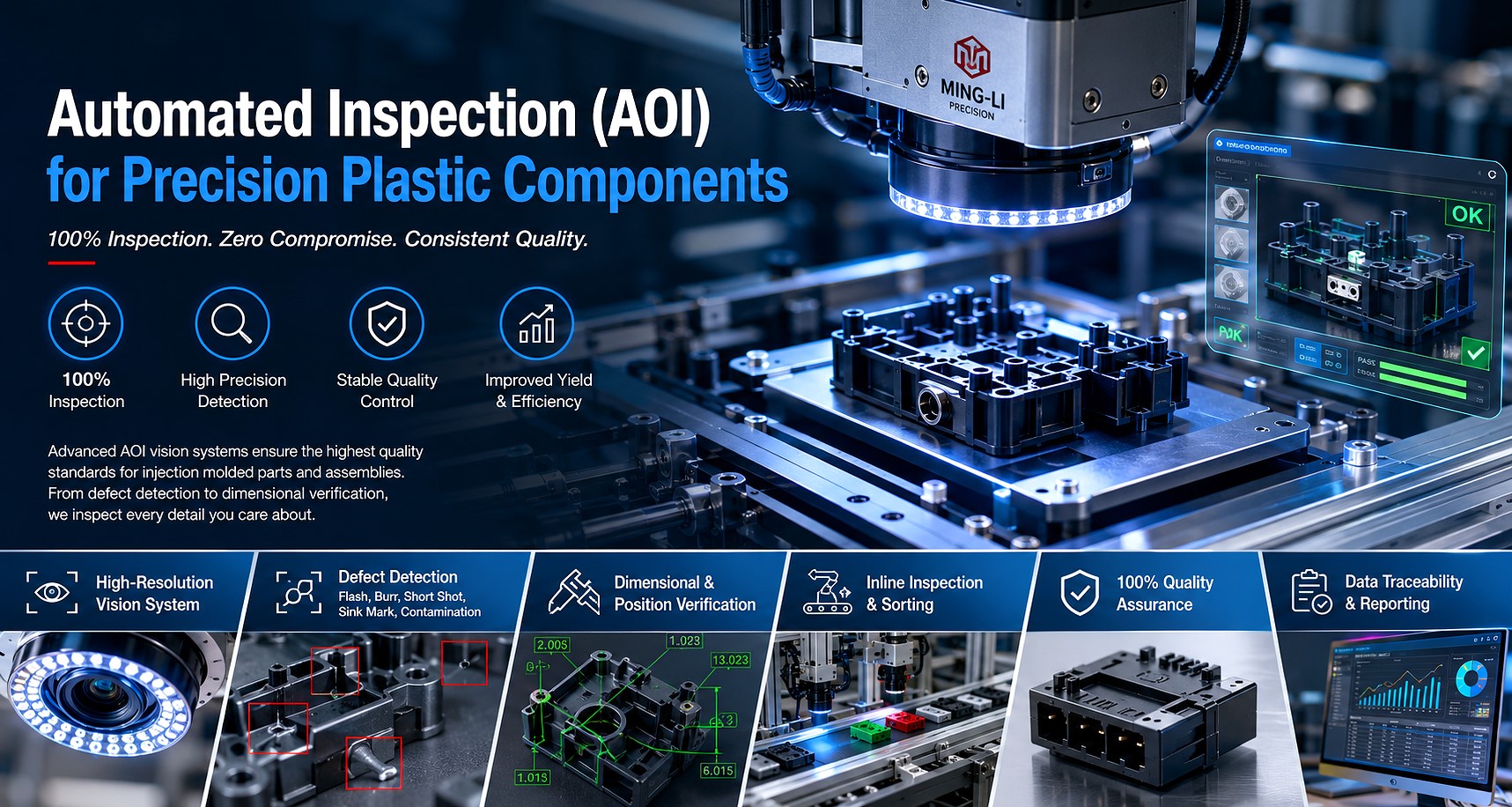
In modern plastic manufacturing, Automated Optical Inspection (AOI) for plastic components has become essential to ensure stable product quality, dimensional consistency, and defect-free production. For industries such as medical devices, automotive electronics, connectors, micro molded parts, and power modules, even microscopic defects can lead to product failure, assembly issues, or costly field returns.
At Ming-Li Precision, we integrate Automated Optical Inspection (AOI), advanced vision inspection systems, and automated quality verification into our precision manufacturing workflow. This supports 100% inspection, reduces human error, and maintains consistent mass production quality for precision plastic parts and assemblies.
What is Automated Optical Inspection (AOI) for Plastic Components?
Automated Optical Inspection, commonly known as AOI, is a vision-based inspection method that uses high-resolution cameras, optical sensors, lighting systems, and intelligent vision algorithms to inspect parts during or after production.
For plastic injection molded components, AOI helps identify defects that are difficult to detect consistently through manual inspection. It provides objective pass/fail judgment, stable inspection criteria, and real-time quality control.
100% Inspection
Every part can be verified before shipment.
Defect Detection
Detect flash, burrs, short shots, contamination, and cosmetic defects.
Stable Quality Control
Repeatable inspection criteria reduce variation and human error.
Automated Optical Inspection for Plastic Parts & Components
Ming-Li specializes in automated optical inspection for plastic parts, especially for applications requiring tight tolerances, cosmetic precision, insert positioning, and assembly reliability.
Precision Injection Molded Parts
Inspection of molded geometry, cosmetic defects, molding consistency, and critical features.
Insert Molding & Overmolding
Verification of insert position, terminal alignment, exposed metal areas, and bonding quality.
Micro Molded Components
AOI inspection for ultra-small features and precision-critical plastic components.
Connector Components
Inspection of terminals, alignment, dimensional consistency, flash control, and assembly orientation.
Medical Components
100% visual inspection for defect prevention, process validation, and stable production quality.
Power Module Components
Verification of terminal locations, insert positioning, housing features, and assembly consistency.
Common Plastic Defects Detected by Automated Optical Inspection
Injection Molding Defects
- Flash
- Short shot
- Burrs
- Sink marks
- Warpage
- Surface contamination
- Cosmetic imperfections
Insert & Assembly Defects
- Insert displacement
- Terminal misalignment
- Improper insert positioning
- Exposed metal areas
- Missing components
- Incorrect orientation
- Functional positioning errors
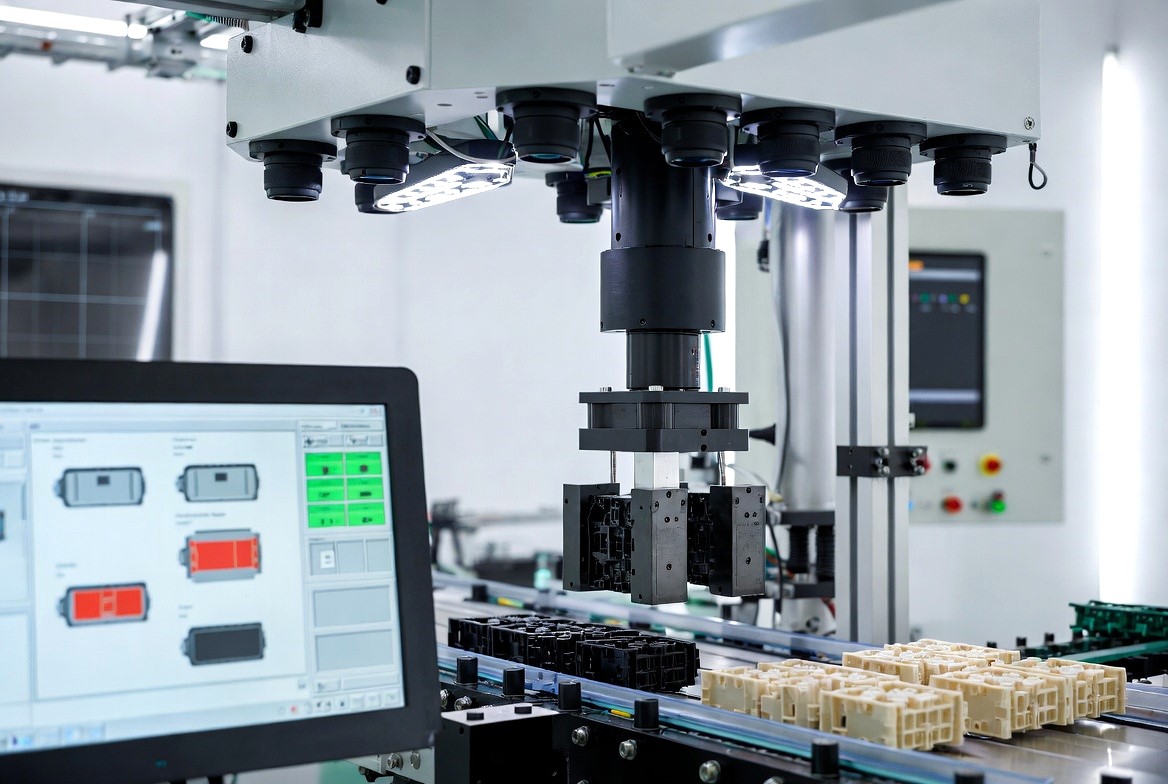
Inline Automated Optical Inspection for Plastic Injection Molding
To improve production efficiency and reduce quality risk, Ming-Li can integrate inline automated optical inspection into plastic injection molding and assembly workflows.
- Inline production inspection
- Post-molding inspection
- Automated assembly inspection
- Sorting and pass/fail separation
- Real-time defect feedback
- Process monitoring for quality consistency
Why Automated Optical Inspection is Critical for Plastic Manufacturing
Improve Product Quality
Stable and repeatable inspection criteria reduce variation across production batches.
Reduce Human Error
AOI minimizes inconsistency caused by manual visual inspection.
Improve Yield
Defects can be detected earlier, allowing faster process feedback and correction.
AOI + Precision Manufacturing at Ming-Li
At Ming-Li Precision, inspection is not a separate process. It is integrated into our complete precision manufacturing ecosystem.
Applications of Automated Optical Inspection
- Medical devices
- Automotive electronics
- Power modules
- Connectors and electronic components
- Micro precision components
- Sensor components
- Consumer electronics
- High-reliability industrial products
Frequently Asked Questions
What is Automated Optical Inspection (AOI)?
Automated Optical Inspection is a vision-based inspection method that uses cameras, lighting, and software algorithms to detect defects, verify features, and support automated quality control.
Why is AOI important for plastic injection molding?
AOI helps detect flash, short shots, burrs, contamination, misalignment, and other defects that may affect assembly or product performance.
Can AOI inspect insert molding components?
Yes. AOI can verify insert position, terminal alignment, exposed metal areas, and orientation for insert molding and overmolding parts.
Can Automated Optical Inspection verify dimensions?
AOI can verify selected visual dimensions, positions, profiles, and presence/absence features. For full dimensional reports, Ming-Li can also support precision metrology and CT scanning.
Is AOI suitable for micro molded plastic parts?
Yes. AOI is suitable for micro molded plastic parts where small defects or feature deviations are difficult to inspect manually.
Looking for Automated Optical Inspection for Plastic Components?
Whether your project involves precision injection molding, insert molding, micro molding, connector parts, or high-reliability assemblies, Ming-Li Precision can provide customized Automated Optical Inspection (AOI) solutions to support stable, scalable, and defect-free production.
Contact Ming-Li Precision