
Torsion Testing
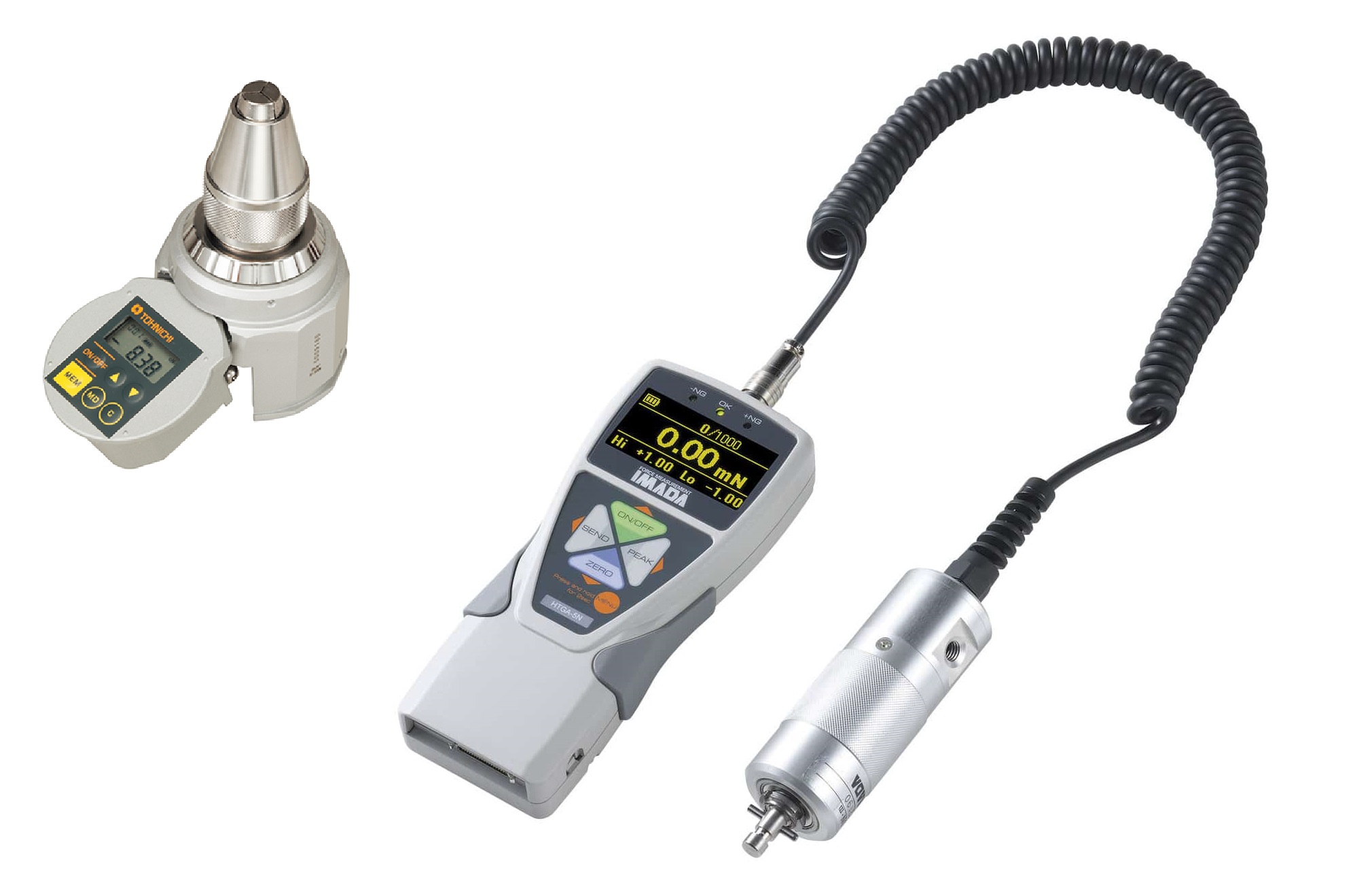
Structural Integrity Under Twist: Technical Introduction to Torsion Testing for Molded Parts
In high-performance engineering, mechanical failure often occurs not just from tension or compression, but from rotational stress. For precision-molded components—particularly those used in automotive drivetrains, aerospace actuators, and medical rotary devices—Torsion Testing is a critical validation step. It ensures that a part can withstand twisting forces without permanent deformation or catastrophic fracture.
What is a Torsion Test?
A torsion test applies a rotational force (torque) to a molded component to evaluate its shear mechanical properties. Unlike a tensile test that pulls a part apart, a torsion test twists it along its longitudinal axis. This is essential for verifying the performance of cylindrical parts, shafts, and integrated connectors that experience rotational load during installation or operation.
The Mechanics of Torsion
When a molded part is twisted, it experiences Shear Stress (t) and Shear Strain (gamma). The relationship between these factors determines the material's Modulus of Rigidity (G), which is a measure of the part's stiffness in response to twisting.
The shear stress at the surface of a circular cross-section is calculated as:
-
T: Applied torque (N·m).
-
r: Distance from the center to the outer surface.
-
J: Polar moment of inertia (reflecting the part's geometry and resistance to twisting).
Critical Parameters Measured
A comprehensive torsion analysis provides several key data points:
-
Ultimate Torque: The maximum torque the part can withstand before failure.
-
Angle of Twist at Break: How much the part can rotate before snapping, indicating its ductility or brittleness.
-
Torsional Yield Strength: The point at which the part begins to deform permanently.
-
Shear Modulus (G): Essential for engineers to predict how a part will behave under varying rotational loads.
Industrial Applications for Molded Components
Torsion testing is a functional necessity for parts that serve as the "bridge" between mechanical and electronic systems:
-
Aerospace & Satellite Hardware: For high-performance components like PEEK stator coil fixing rings, torsion testing ensures the material maintains its structural integrity under the high-vibration and rotational stresses of launch and deployment.
-
Automotive Mechatronics: Components within IGBT/SiC power module housings must resist twisting during assembly or when subjected to thermal expansion and contraction cycles.
-
Large-Scale Connector Integration: In complex mechatronic assemblies, torsion tests verify that the bond between insert-molded metal terminals and the polymer body is strong enough to prevent loosening or electrical failure during high-torque plug-in events.
Material Considerations: PEEK, LCP, and Beyond
The torsional strength of a molded part is heavily influenced by the choice of polymer and the molding process itself:
-
Fiber Orientation: In materials like glass-filled PBT or LCP, the direction of the fibers during the injection process significantly impacts torsional resistance.
-
Knit Lines (Weld Lines): A torsion test is the most effective way to detect weaknesses at weld lines, where the molten plastic meets during the injection cycle.
-
Hygroscopic Effects: For materials prone to moisture absorption, verifying torsional strength after environmental conditioning is vital to ensure long-term field reliability.
Integrating Torsion Testing into "Total Engineering Solutions"
By incorporating torsion testing into the validation workflow—alongside ZEISS CMM dimensional checks and Electrical Functional Testing—manufacturers can provide a comprehensive guarantee of part performance. This closed-loop quality approach is what allows high-precision components to meet the stringent safety and durability standards of global technology leaders in the EV and medical sectors.
As parts become smaller and materials become more advanced, the margin for error in rotational mechanics disappears. Torsion testing provides the empirical evidence needed to prove that a molded component is not just accurate in its dimensions, but robust in its physical reality.
Torsion Test: Ming-Li Precision’s Capability with Torque Meters and Digital Torque Wrenches
Introduction
In many precision components—especially those involving threads, inserts, shafts, and assembled parts—torsional performance is a critical indicator of product reliability. Whether it is ensuring proper fastening strength or validating mechanical integrity, torsion testing plays a key role in quality assurance.
At Ming-Li Precision Steel Molds Co., Ltd., we support customers with comprehensive testing capabilities, including torsion testing using torque meters and digital torque wrenches, to verify product performance under real-world conditions.
What is a Torsion Test?
A Torsion Test evaluates how a component behaves when subjected to rotational force (torque). It is commonly used to determine:
- Maximum torque before failure
- Thread strength and engagement quality
- Insert retention strength (insert molding)
- Assembly torque consistency
- Mechanical durability under rotational stress
This test is essential for ensuring that parts can withstand operational loads without loosening, cracking, or failing.
Ming-Li Precision’s Torsion Testing Capability
Ming-Li Precision is equipped with:
- Torque Meters (Torque Testers)
- Digital Torque Wrenches
These tools enable accurate and repeatable torsion testing across a wide range of applications, from small precision components to larger assemblies.
Key Equipment and Advantages
1. Torque Meters for Accurate Measurement
Torque meters provide:
- Precise torque measurement (Nm / kgf·cm / lbf·in)
- Peak torque capture (maximum torque before failure)
- High repeatability for testing consistency
This allows Ming-Li to accurately evaluate product strength and performance.
2. Digital Torque Wrenches for Controlled Testing
Digital torque wrenches enable:
✔ Controlled application of torque
✔ Real-time torque monitoring
✔ Consistent and repeatable testing conditions
This is especially useful for:
- Assembly validation
- Thread tightening verification
- Functional testing of components
3. Simulation of Real Application Conditions
Torsion testing at Ming-Li is designed to:
- Simulate real-world usage conditions
- Verify product reliability under operational stress
- Ensure compliance with customer specifications
4. Support for Custom Testing Requirements
Ming-Li can:
- Develop customized fixtures and jigs
- Adapt testing setups based on product geometry
- Support specific torque requirements defined by customers
This flexibility ensures accurate testing for a wide variety of applications.
Applications at Ming-Li Precision
• Insert Molding Components
- Testing retention strength of metal inserts
- Verifying bonding performance between plastic and metal
• Threaded Plastic Parts
- Evaluating thread strength and durability
- Preventing stripping or failure during use
• Assembly Verification
- Ensuring correct torque during assembly
- Validating fastening performance
• Precision Mechanical Components
- Testing shafts, gears, and rotating parts
- Ensuring reliable torque transmission
Why Torsion Testing Matters
Insufficient torsional strength can lead to:
- Loose assemblies
- Thread failure
- Product malfunction
- Safety risks
By performing torsion testing, Ming-Li Precision helps ensure:
✔ Reliable product performance
✔ Consistent assembly quality
✔ Improved durability and lifespan
✔ Reduced risk of field failure
Ming-Li Precision’s Engineering Advantage
Ming-Li Precision combines:
- Precision mold manufacturing
- Insert molding and 2K molding expertise
- Assembly and automation capability
- In-house testing and validation
This enables Ming-Li to provide a Total Engineering Solution, from design validation to final product testing.
Conclusion
With the support of torque meters and digital torque wrenches, Ming-Li Precision offers reliable and flexible torsion testing capability to validate product performance and ensure quality.
For customers developing components that require mechanical strength and durability, Ming-Li Precision is a trusted partner for both manufacturing and testing support.
Contact Ming-Li Precision
If your project requires:
- Torsion testing and validation
- Insert molding or threaded components
- High-precision manufacturing
Ming-Li Precision is ready to support your project with complete engineering and testing solutions.