
Blog
Precision PEEK Components for Rotary Valve & Fluid Control Applications – Ming-Li PEEK Injection Molding Manufacturer
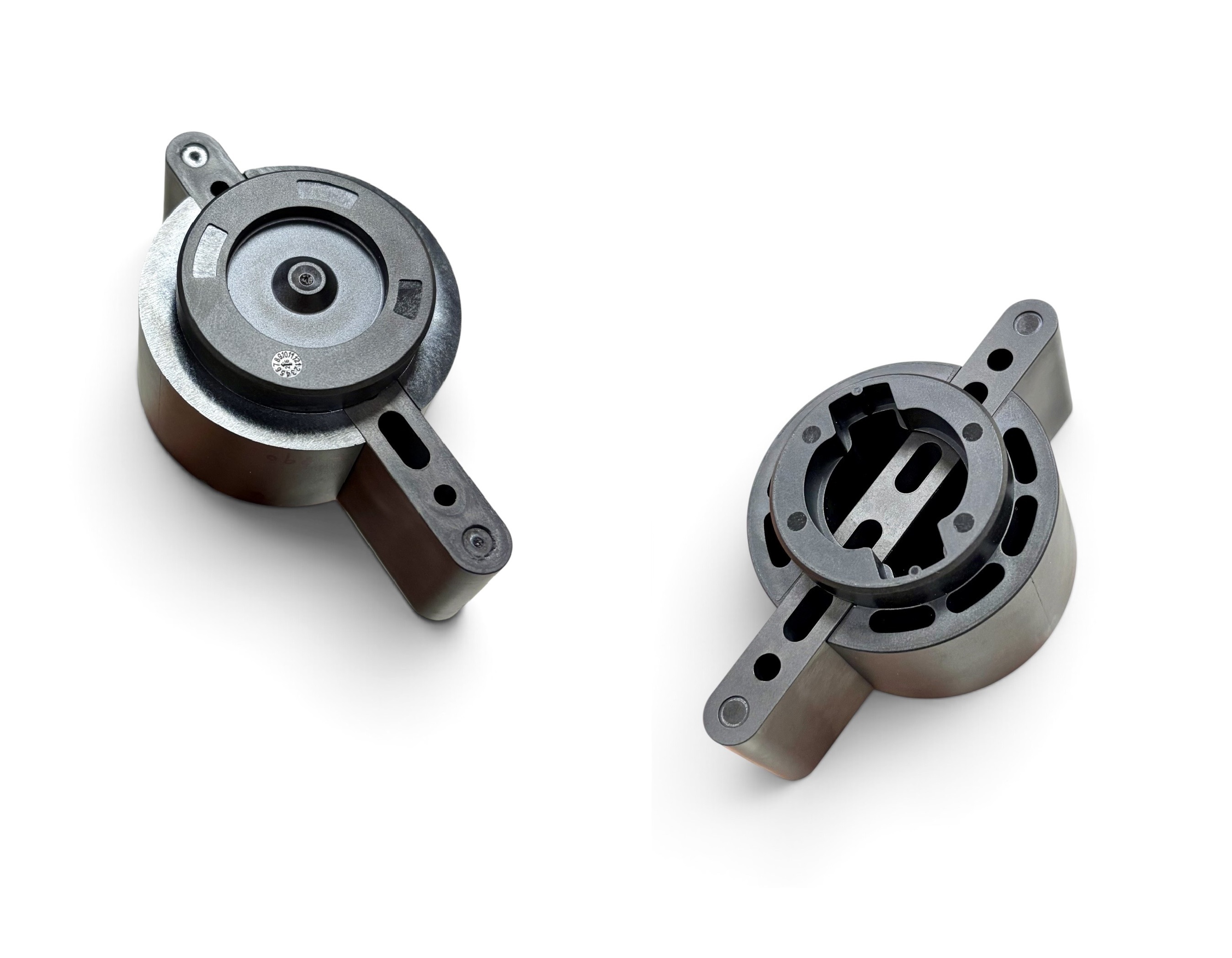
Custom PEEK Injection Molding for High-Performance Applications
Ming-Li Precision is an experienced PEEK injection molding manufacturer in Taiwan, specializing in custom PEEK injection molding, precision mold manufacturing, and high-performance engineering plastic components.
From mold design and precision machining to PEEK injection molding and mass production, Ming-Li provides an integrated manufacturing solution for customers developing demanding PEEK components for automotive, fluid control, medical, semiconductor, aerospace, and industrial applications.
One example is this precision PEEK molded rotary component used in a fluid control mechanism. In this type of application, the component must maintain dimensional stability and mechanical performance while operating under repeated movement, pressure, temperature variation, and exposure to fluids.
This is exactly where PEEK can provide significant advantages over conventional engineering plastics.
Why PEEK for Rotary Valve and Fluid Control Components?
PEEK (Polyether Ether Ketone) is a high-performance thermoplastic known for its excellent combination of mechanical strength, high-temperature resistance, chemical resistance, wear resistance, and dimensional stability.
A rotary valve component may experience repeated rotational movement while simultaneously controlling fluid flow. Depending on the application, the component may also be exposed to pressure, elevated temperatures, coolants, oils, chemicals, or other demanding operating conditions.
Typical PEEK applications in fluid control systems include:
- Rotary valve components
- Valve seats and valve bodies
- Fluid control components
- Pump components
- Bushings and bearings
- Sealing components
- Precision gears
- High-temperature mechanical components
PEEK Injection Molding for Demanding Operating Conditions
Compared with conventional plastics such as PA, POM, PC, PBT, and many other engineering polymers, PEEK can maintain excellent mechanical performance under significantly more demanding operating conditions.
High-Temperature Resistance
PEEK has a melting temperature of approximately 343°C and maintains useful mechanical properties at temperatures well beyond the capabilities of most conventional engineering plastics.
This makes PEEK injection molding suitable for components exposed to high operating temperatures and repeated thermal cycling.
Mechanical Strength
Fluid control and rotary components can be subjected to pressure, torque, vibration, and continuous mechanical loading.
PEEK provides an excellent combination of strength, stiffness, and toughness. Depending on the application, reinforced materials such as GF30 PEEK or CF30 PEEK can also be considered when additional stiffness or dimensional stability is required.
Wear Resistance
Rotary mechanisms frequently involve repeated contact between moving components. PEEK offers excellent wear and friction characteristics, making it suitable for valve elements, gears, bushings, bearings, and other precision mechanical parts.
Chemical Resistance
PEEK provides excellent resistance to many industrial fluids, oils, fuels, lubricants, and chemicals. This is particularly important for components used in pumps, valves, automotive thermal management systems, industrial equipment, and other fluid-handling applications.
Precision Matters in PEEK Rotary Valve Components
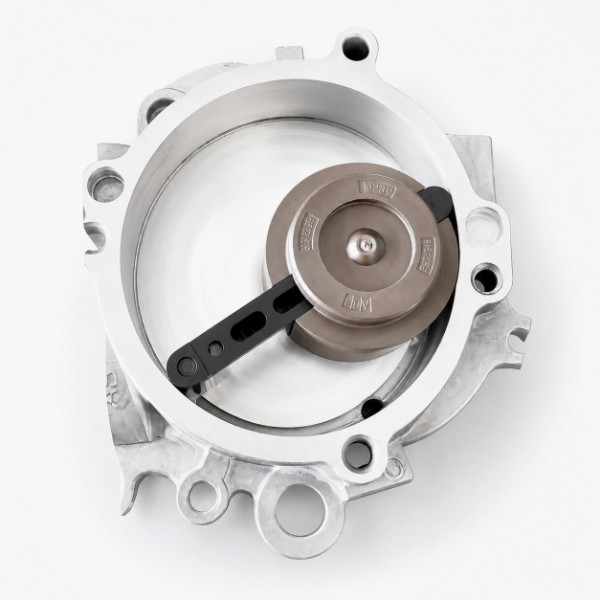
A PEEK rotary component may simultaneously perform several functions:
Because these functions are integrated into a single component, dimensional accuracy becomes extremely important.
Excessive clearance between the PEEK component and the surrounding housing may influence fluid leakage or flow performance, while insufficient clearance may increase friction or interfere with rotational movement.
This means successful custom PEEK injection molding requires more than simply producing the geometry shown in a 3D drawing.
The mold design, material behavior, shrinkage, gate position, weld line, crystallinity, processing temperature, and dimensional compensation must all be considered during development.
Why PEEK Injection Molding Is More Challenging
PEEK is considerably more demanding to process than conventional engineering plastics. Its high processing temperature requires suitable injection molding equipment, mold materials, heating systems, and precise process control.
- Incomplete filling
- Weld line weakness
- Warpage and internal stress
- Dimensional instability
- Surface defects
- Inconsistent crystallinity
- Inconsistent mechanical performance
For this reason, choosing an experienced PEEK injection molding manufacturer is particularly important for precision or safety-critical applications.
Mold Design Is the Foundation of Successful PEEK Injection Molding
At Ming-Li, we believe successful PEEK molding starts with the mold itself.
Gate Design and Weld Line Control
Gate position can influence filling behavior, molecular or fiber orientation, weld line location, pressure distribution, and final dimensional performance. For mechanically loaded PEEK components, the position of weld lines should be carefully evaluated during the mold design stage.
High-Temperature Mold Control
PEEK typically requires significantly higher mold temperatures than conventional engineering plastics. Stable and uniform mold temperature is important for achieving consistent crystallinity, dimensional stability, and mechanical performance.
Venting
Proper venting helps prevent trapped gas, burns, incomplete filling, and other molding defects.
Shrinkage and Dimensional Compensation
PEEK shrinkage is affected by component geometry, material grade, reinforcement, flow direction, gate position, mold temperature, and processing conditions. For precision PEEK components, dimensional compensation should therefore be considered as part of mold engineering and validation.
Ming-Li Custom PEEK Injection Molding Capabilities
Ming-Li combines mold manufacturing and injection molding capabilities under one integrated manufacturing system.
- Precision injection molding
- Insert molding and overmolding
- High-temperature engineering plastic molding
- Ultra-precision mold machining
- Precision dimensional inspection
- Process optimization
- Prototype-to-mass-production development
By integrating mold design, precision machining, injection molding, and metrology, Ming-Li can evaluate the complete manufacturing process rather than focusing only on the injection molding stage.
From Mold Design to PEEK Mass Production
For a new PEEK component, Ming-Li can support customers throughout the complete development process:
Early engineering involvement can help identify potential issues related to wall thickness, draft angle, undercuts, gate location, weld lines, deformation, dimensional tolerances, and material selection before tooling begins.
PEEK Injection Molding Applications
Ming-Li's custom PEEK injection molding and precision tooling capabilities can support high-performance applications across multiple industries.
| Industry | Typical PEEK Injection Molding Applications |
|---|---|
| Automotive & EV | Thermal management valves, cooling system components, electrical insulation, sensor components |
| Fluid Control | Rotary valves, valve components, pumps, seals and flow-control mechanisms |
| Medical Devices | Precision mechanical parts, sterilizable components and device components |
| Semiconductor | Chemical-resistant and high-temperature precision components |
| Industrial Equipment | Gears, bearings, bushings, pumps and precision mechanical components |
| Electronics | High-temperature connectors and electrical insulation components |
| Aerospace | Lightweight, high-temperature and fluid-handling components |
Looking for a PEEK Injection Molding Manufacturer?
PEEK is one of the highest-performance thermoplastics available, but achieving consistent product performance requires the right combination of material knowledge, mold engineering, precision machining, molding technology, and quality control.
Ming-Li is a PEEK injection molding manufacturer in Taiwan providing custom PEEK injection molding, precision PEEK mold manufacturing, and mass-production support for demanding applications.
Whether you are developing a rotary valve, fluid control component, precision gear, automotive component, medical device, semiconductor component, or industrial mechanism, our engineering team can evaluate your application from both the product and manufacturing perspectives.
Ming-Li can help you develop a reliable and cost-effective PEEK injection molding solution from mold design to mass production.